

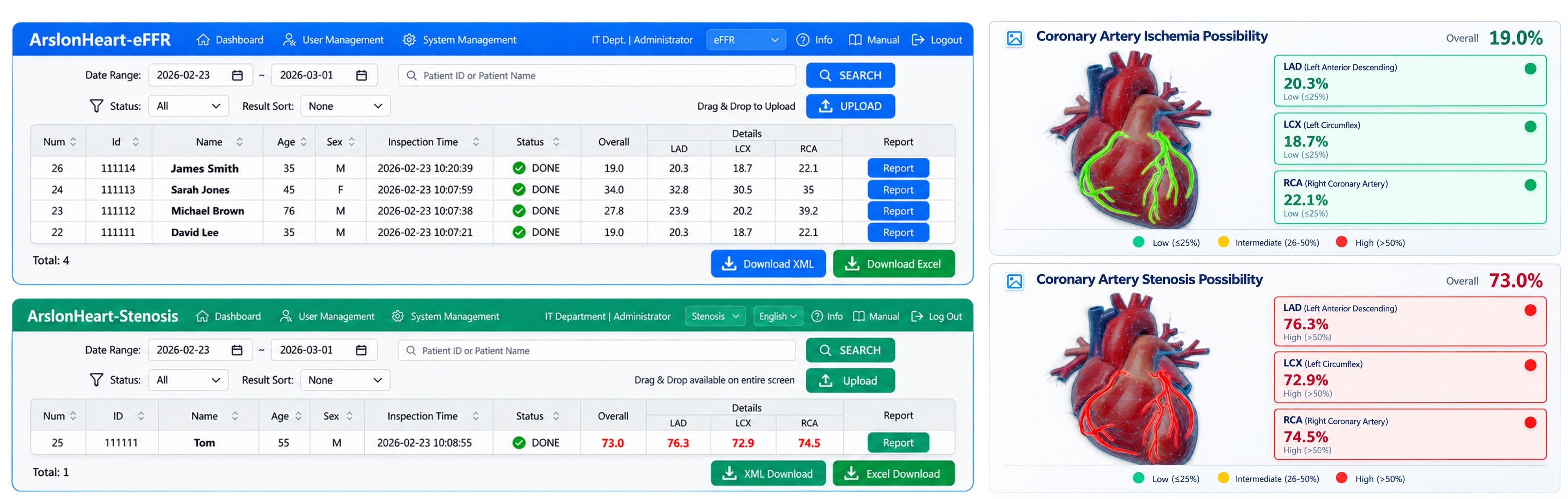
ArslonHeart-CAD is an AI-based medical software solution being developed for the early screening of ischemic heart disease. Using standard 12-lead ECG data, the solution analyzes a routine 10-second ECG with deep learning and Graph Neural Network (GNN) technologies to assess coronary artery stenosis and myocardial ischemia-related information.
Unlike conventional diagnostic procedures that may involve radiation, contrast agents, or invasive procedures, ArslonHeart-CAD is designed to provide a simple and non-invasive approach based on an ECG that is already widely used in routine healthcare and health screening.
The solution is intended to support the identification of patients who may require further cardiovascular evaluation and to assist clinical decision-making. Arslon is currently conducting clinical and technical validation with medical and research institutions and is preparing for regulatory approval and commercialization.

"AlzWIN," SevenPointOne’s flagship solution, is a digital healthcare solution that uses AI to analyze just one minute of spoken voice data to quickly and accurately screen for the risk of cognitive decline. It detects changes in cognitive function early on through a simple, conversational test, without the need for complex medical interviews or costly tests.
AlzWIN has been validated at the global level through registration with the U.S. FDA. Recently, it successfully completed a confirmatory clinical trial for medical device approval from the Ministry of Food and Drug Safety (MFDS), securing strong clinical efficacy and technical reliability.
Ultra-Simple Screening: Identifies high-risk groups for cognitive decline using just one minute of voice data
Validated Domestically and Internationally: U.S. FDA registration and completion of MFDS confirmatory clinical trial
On-site, Customizable Scalability: Can be immediately implemented in senior care facilities, public health centers, hospitals and clinics, and even integrated into insurance provider care models.
AlzWIN provides the fastest and most accurate cognitive care standard, bridging the gap between daily life and clinical practice.
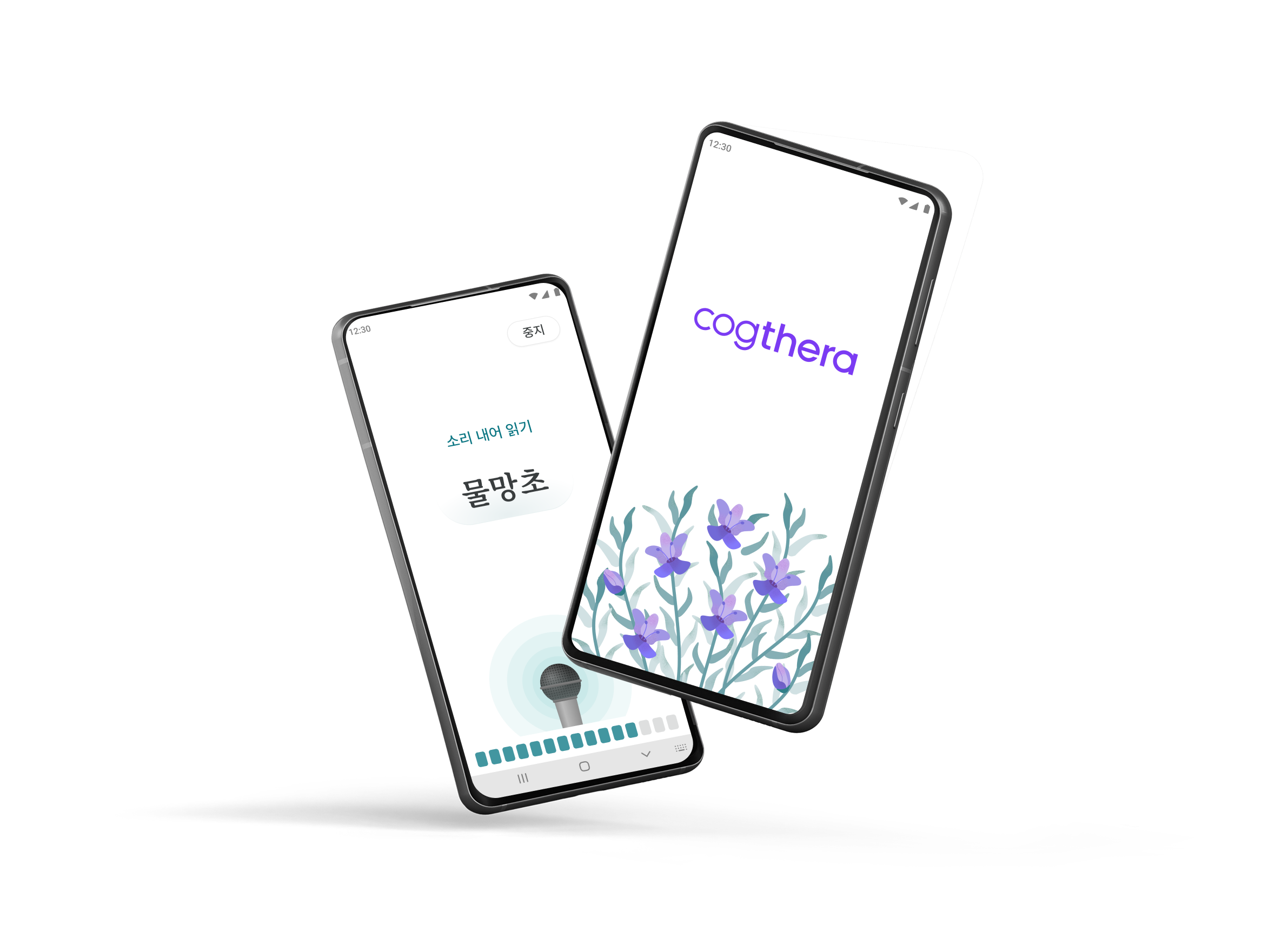
Cogthera, a digital therapeutic (DTx) developed for patients with mild cognitive impairment (MCI), received approval from South Korea’s Ministry of Food and Drug Safety (MFDS) in May 2025. Featuring a voice-based interface designed for older adults and an algorithm that adjusts difficulty based on cognitive status, Cogthera delivers personalized daily training content.

ETHISYNC’s Autism Spectrum Disorder Diagnostic Support System is a digital healthcare solution that uses non-contact eye-tracking technology to collect and analyze gaze and oculomotor behavior while children view visual stimuli. The system quantifies fixation patterns and gaze transition characteristics across key areas of interest, including faces, eyes, mouths, people, and geometric stimuli, and provides objective indicators associated with autism spectrum characteristics. During the assessment process, quality metrics such as calibration accuracy, viewing rate, and valid data ratio are monitored to improve analytical reliability. The results are designed to support clinicians as supplementary information alongside existing clinical assessments. By using a non-invasive and contact-free approach, the system minimizes the burden on infants and children and aims to establish a data-driven assessment environment that can be extended from early screening and diagnostic support to continuous monitoring of developmental changes.

ScopeEndo is an advanced artificial intelligence-powered software solution engineered to enhance diagnostic precision and clinical workflow during gastrointestinal endoscopy. By combining state-of-the-art medical computer vision algorithms with optimized edge AI architecture, ScopeEndo analyzes high-definition video frames in real time without operational latency, assisting endoscopists during critical procedures.
The solution delivers high-sensitivity Computer-Aided Detection (CADe), identifying subtle polyps, early-stage adenomas, and sessile serrated lesions that may be overlooked during routine colonoscopy. This substantially supports higher Adenoma Detection Rates (ADR) while reducing practitioner fatigue. In addition, ScopeEndo provides automated lesion size estimation, delivering objective quantitative metrics to support informed decisions regarding endoscopic resection and subsequent clinical pathways.
Engineered for seamless integration with existing endoscopic infrastructure, ScopeEndo achieved medical device GMP certification and an official manufacturing license in early 2026. Through rigorous clinical validation and multi-center proof-of-concept trials with leading university hospitals, ScopeEndo is establishing a new standard of reliability and clinical efficiency in modern digestive endoscopy.

The eCEN Tracker is a compact wearable gait-analysis system that attaches above and below the knee, measuring and analyzing 35 distinct gait parameters in real time. By quantifying subtle changes in gait patterns as well as balance and stability, it enables early identification of abnormal gait and fall risk, while supporting continuous, remote monitoring of post-surgical recovery and mobility changes over time. Measurement results are automatically compiled into intuitive, clinician-friendly reports that support clinical decision-making, and the system integrates seamlessly with existing hospital and rehabilitation-facility infrastructure. Registered as a Class 1 medical device, the eCEN Tracker is a validated gait-analysis solution applicable across a range of settings, from in-hospital diagnosis to home-based rehabilitation and remote health management.
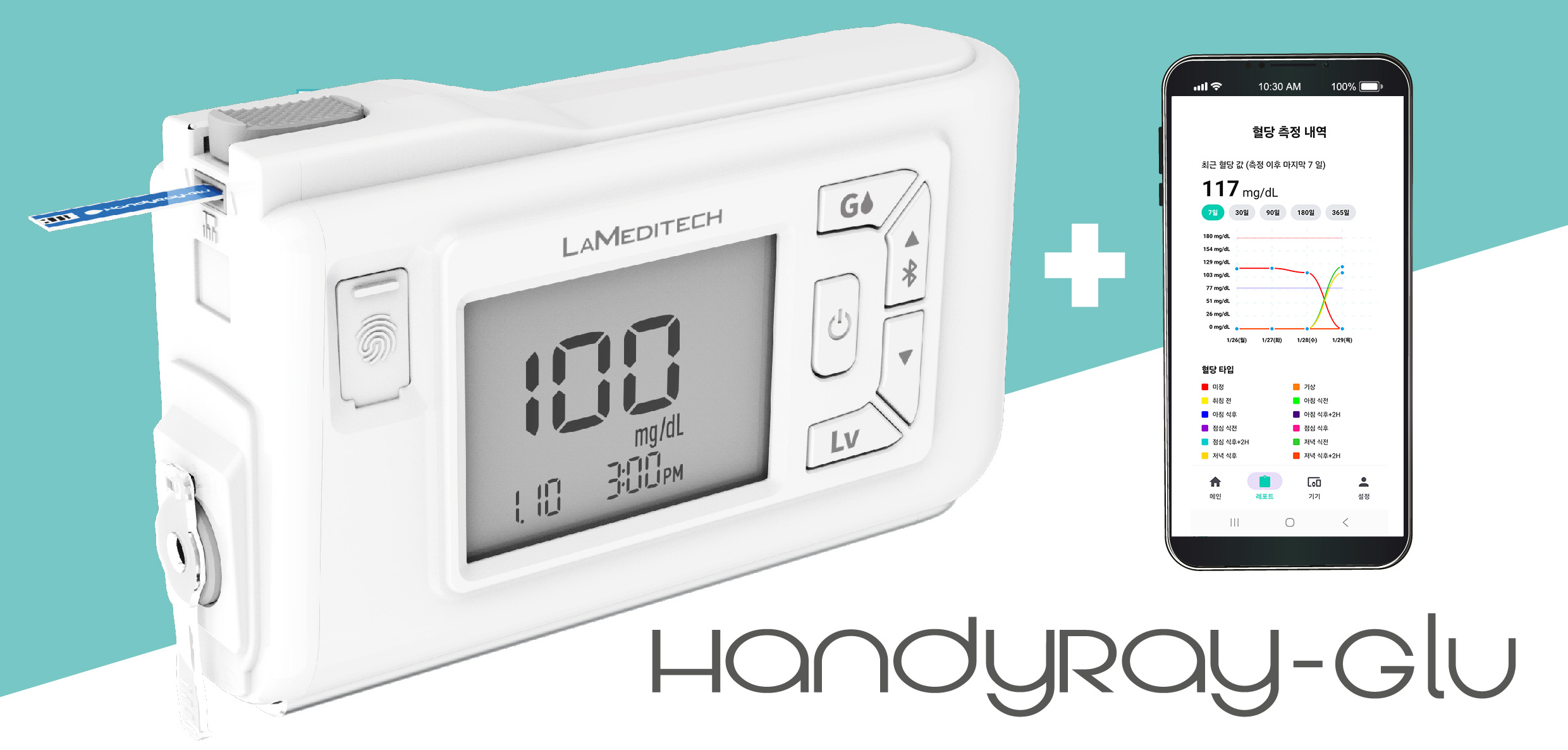
HandyRay-Glu (BL-6000) is an innovative blood glucose monitoring system that combines laser-based blood sampling and glucose measurement in one compact device.
Unlike conventional finger-pricking methods that use a needle lancet, HandyRay-Glu uses LaMeditech’s proprietary laser technology to obtain a small capillary blood sample, helping reduce the discomfort and anxiety associated with repeated blood glucose testing. It is designed to provide a more comfortable and convenient testing experience for users who need regular glucose monitoring.
HandyRay-Glu offers an easy and intuitive measurement process. Users can select the appropriate laser level, collect a small blood sample, and obtain a blood glucose result in approximately 5 seconds. The device can store up to 1,000 test results and provides average values for convenient long-term monitoring.
For smarter diabetes management, measurement data can also be transferred via Bluetooth to the WeCareU mobile application, allowing users to review recent glucose results, trends, and statistical information directly on their smartphone.
By integrating blood sampling, glucose measurement, data storage, and mobile connectivity into a single system, HandyRay-Glu provides a differentiated solution for daily self-monitoring of blood glucose. It is especially suitable for users seeking a more convenient alternative to conventional needle-based blood sampling.
(1) Core Technology Details
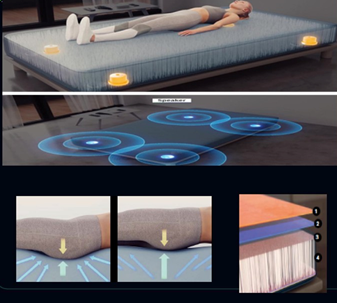
1) Product Name: ‘EasyLab’ - A smart micro-vibration mattress equipped with biosensors
2) Purpose: Prevention and treatment of pressure ulcers (medical-grade body pressure distribution mattress); relief of insomnia.
3) Features: ICT convergence capabilities
① Sound wave vibration module: Promotes blood flow through subtle vertical vibration stimulation.
② Flat-surface-maintaining fiber: Provides continuous (24-hour) body pressure distribution without electricity.
③ Biosignal sensors: Receive and analyze signals regarding physical condition and provide remote feedback.
(2) Excellence and Characteristics of Core Technology
1) Originality of Core Technology
① World’s first pressure ulcer management system utilizing micro-vertical vibration to improve blood flow.
② Converged technology combining vibration modules with air-fiber designed to maintain a flat surface for continuous, non-electric
body pressure distribution.
③ IoT-based technology for collecting and analyzing biometric data and providing remote feedback.
④ Technology allowing for the selection of vibration sound sources customized to specific use cases.
(3) Innovative Technical Features
① World’s first medical device registration for an innovative approach combining ‘continuous non-electric body pressure
distribution’ and ‘blood flow promotion via micro-vibration.’
② Medical device registration completed with the Korea Ministry of Food and Drug Safety (MFDS) for superior sleep-tech and mind-
body stabilization capabilities.
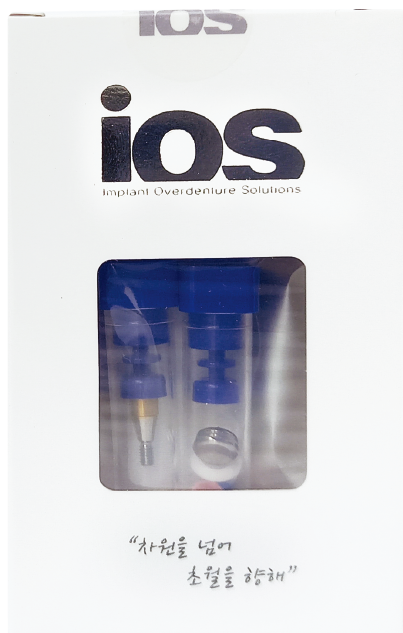
implant Overdenture
Multimodal AI Cardiovascular Healthcare Platform